


Syria forms committee to investigate deadly Sweida violence
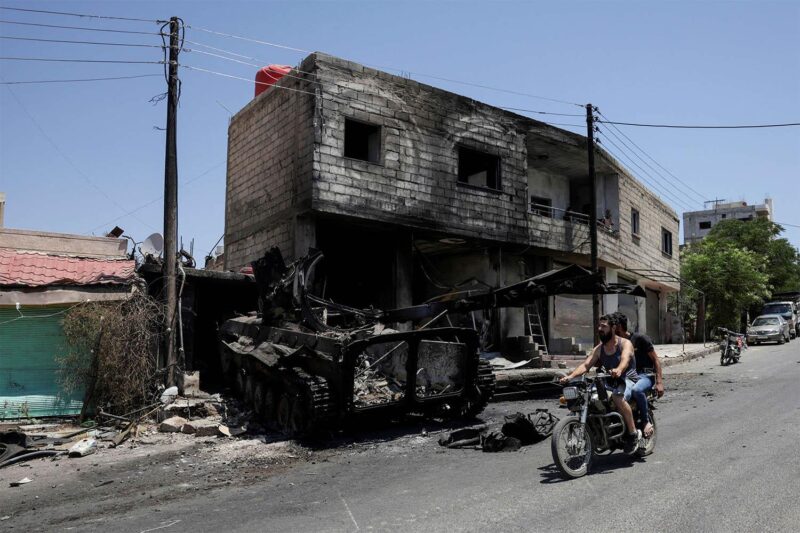
The Syrian government has announced the formation of an investigative committee to examine last month’s deadly violence in Sweida province, which left hundreds dead in one of the gravest outbreaks of sectarian bloodshed since the departure of former president Bashar al-Assad.
In a decree dated 31 July, Justice Minister Muzher al-Wais tasked a seven-member body—comprising judges, legal experts, and a military representative—with probing the events that unfolded in Sweida. The committee will report its findings within three months and refer any individuals implicated in attacks on civilians to the judiciary.
Clashes began on 13 July between Druze armed groups and tribal factions in Sweida city and nearby towns. Despite the deployment of government forces, the fighting escalated rapidly, prompting Israeli airstrikes against Syrian military positions, citing protection of the Druze minority.
Sweida is a predominantly Druze region, but it is also home to Sunni tribes, and local disputes over land and resources have long fuelled tension between the communities.
A U.S.-brokered ceasefire helped halt the week-long fighting, which marked the second major flare-up of sectarian violence in Syria this year.
In March, Syria’s coastal regions witnessed another wave of bloodshed when pro-Assad militias clashed with newly deployed government forces, resulting in the deaths of hundreds of Alawite civilians. Assad, who belongs to the Alawite minority, was ousted in a years-long conflict that began with a brutal crackdown on anti-government protests in 2011.
Following the March violence, a fact-finding panel referred 298 individuals to judicial authorities for alleged abuses against Alawite civilians. While no evidence was found of direct orders from commanders, the committee confirmed the involvement of over 260 people in the initial attacks.
Syria’s new leadership—drawn from a former Sunni Islamist group with historical ties to global jihadist movements—is facing mounting international pressure to ensure a stable and inclusive transition. Sectarian tensions, unresolved grievances, and local rivalries continue to threaten that fragile process.
How to submit an Op-Ed: Libyan Express accepts opinion articles on a wide range of topics. Submissions may be sent to oped@libyanexpress.com. Please include ‘Op-Ed’ in the subject line.

- Parliament spokesman denies obstruction after Libyan MPs allege lockout - September 22, 2026
- Hunger strikers’ welfare raised in joint appeal over Tunis detentions - September 22, 2026
- Zawiya refinery faces disruption after Sharara pipeline closure - September 22, 2026