


Trump moves subs after Russian provocation
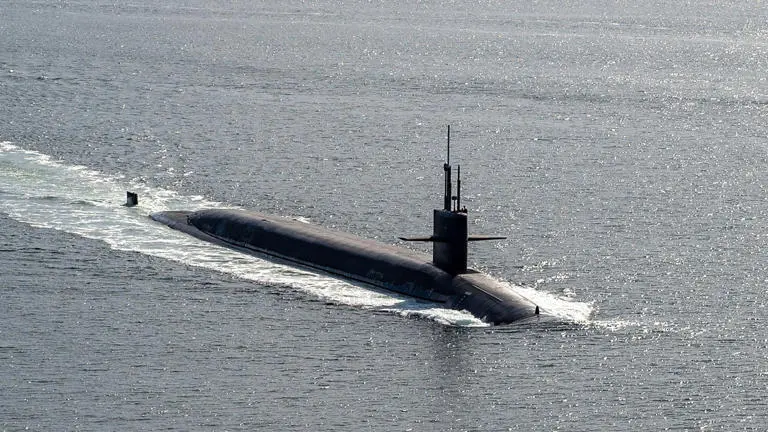
U.S. President Donald Trump has announced the repositioning of two nuclear submarines in response to what he described as “highly provocative” remarks by former Russian President Dmitry Medvedev, raising concerns over escalating tensions between Washington and Moscow.
In a post published Friday on his Truth Social platform, Trump said he ordered the submarines to be deployed “to the appropriate regions,” though he did not specify their location or whether they are nuclear-powered or nuclear-armed—a detail typically withheld under U.S. military protocol.
“Based on the highly provocative statements of the former president of Russia, Dmitry Medvedev… I have ordered two nuclear submarines to be positioned,” Trump wrote, cautioning that “words are very important, and can often lead to unintended consequences.”
The move follows a series of inflammatory exchanges between Trump and Medvedev, who now serves as deputy chairman of Russia’s Security Council. Medvedev had lashed out at Trump’s recent demands for a ceasefire in Ukraine, calling them theatrical and accusing Washington of issuing dangerous ultimatums.
Speaking to reporters later, Trump said his decision was made “on the basis of safety for our people,” in light of what he described as a threat from the former Russian president. “We didn’t think it was appropriate,” he said. “We’re going to protect our people.”
Medvedev has been a vocal supporter of Russia’s war in Ukraine and a frequent critic of the West. On Thursday, he referenced Russia’s “dead hand” doctrine—a term widely interpreted by analysts as a reference to Moscow’s nuclear second-strike capability—in a Telegram post warning of potential consequences if tensions with the U.S. continue to escalate.
The Kremlin has not officially commented on Trump’s remarks, but Russia’s stock market experienced a sharp decline following the news.
The exchange between Trump and Medvedev comes amid mounting pressure from Washington on Moscow to end its war in Ukraine. Trump has repeatedly issued deadlines for Russian President Vladimir Putin to agree to a ceasefire, most recently demanding an end to hostilities by 8 August. Previous ultimatums included threats of sweeping sanctions on Russian energy exports and other economic measures.
With both the United States and Russia maintaining the world’s largest nuclear arsenals, the latest rhetorical standoff has heightened international concern over the risks of miscalculation or escalation.
Medvedev, who served as Russia’s president from 2008 to 2012, responded to Trump earlier this week by saying “each new ultimatum is a step towards war,” accusing the U.S. of provocation.
Trump, in turn, dismissed Medvedev as “the failed former president of Russia” and warned him to “watch his words,” saying the Russian official was “entering very dangerous territory.”
How to submit an Op-Ed: Libyan Express accepts opinion articles on a wide range of topics. Submissions may be sent to oped@libyanexpress.com. Please include ‘Op-Ed’ in the subject line.

- Parliament spokesman denies obstruction after Libyan MPs allege lockout - September 22, 2026
- Hunger strikers’ welfare raised in joint appeal over Tunis detentions - September 22, 2026
- Zawiya refinery faces disruption after Sharara pipeline closure - September 22, 2026