


Syria’s upheaval revives hard questions about Iran’s future
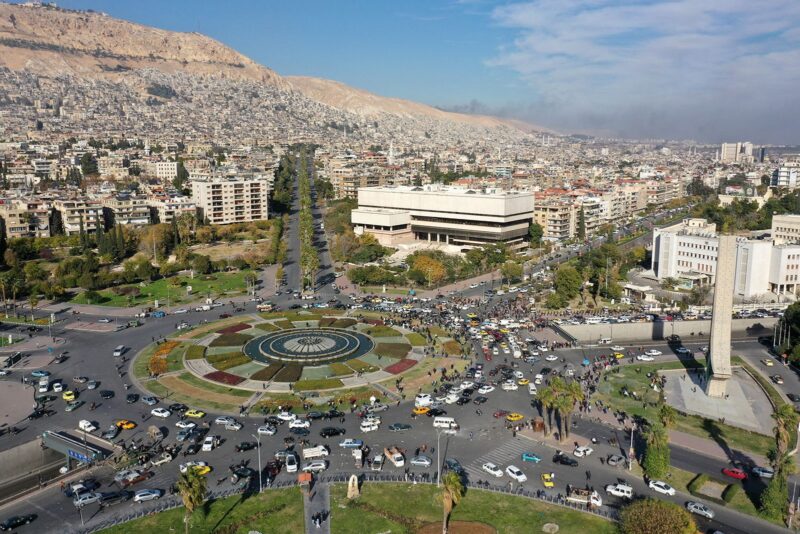
The changes Syria went through in 2025 closed one of the longest and most rigid chapters in the country’s modern history. They also reopened a wider and more unsettling debate across the Middle East about where power now lies, and how secure some of the region’s long-standing political systems really are.
In an opinion article, London-based Lebanese writer Khairallah Khairallah argues that Syria entered 2025 for the first time in more than five decades without the rule of either Hafez al-Assad or his son Bashar al-Assad. For Khairallah, this moment represents far more than the end of a ruling family. It signals a structural shift whose effects are being felt well beyond Syria’s borders.
He contends that the collapse of Assad family rule coincided with the effective loss of Iran’s position in Syria. Over time, he writes, Damascus had moved away from independent decision-making and increasingly operated within the framework of Iran’s regional strategy. The developments of 2025, in his view, brought that era to a close.
From Gaza to the wider region
Khairallah places Syria’s transformation within the context of the regional shockwaves that followed Hamas’s Al-Aqsa Flood attack on Israeli communities around Gaza on 7 October 2023. What followed, he argues, did not remain confined to Gaza or southern Israel. Instead, it set off a sequence of political and military responses that reshaped regional calculations.
It is against this backdrop, Khairallah suggests, that questions about the resilience of Iran’s political system have gained new urgency. What once seemed distant or speculative is now part of open discussion in political and diplomatic circles.
Economic pressure in plain numbers
At the heart of Khairallah’s argument is Iran’s economic condition. He draws a comparison with the Soviet Union, whose collapse in 1991 followed years of economic exhaustion that ultimately undermined its political authority.
Iran’s currency, he notes, offers a stark illustration. In 1979, as the Shah was overthrown, around 70 rials were needed to buy one US dollar. By late 2025, that figure had climbed to roughly 1.4 million rials. Khairallah presents this collapse not as a temporary crisis, but as the cumulative result of isolation, sanctions, and entrenched mismanagement.
The roots of confrontation
Khairallah traces much of Iran’s current predicament back to the early years of the Islamic Republic. He points in particular to the seizure of the US embassy in Tehran in 1979, when American diplomats were held hostage for 444 days. That episode, he argues, was not only a diplomatic rupture but a decisive moment that sidelined reformist currents and locked the country into a confrontational posture towards the West.
Over the decades that followed, the expanding role of the Islamic Revolutionary Guard Corps reshaped Iran’s internal power structure and its regional policy, turning the organisation into a central actor at home and abroad.
Leadership uncertainty at the top
Khairallah also highlights growing uncertainty within Iran’s leadership. He refers to the death of President Ebrahim Raisi in a helicopter crash in May 2024, an incident officially attributed to poor weather but one that continues to generate unanswered questions.
Raisi, he argues, had helped compensate for the absence of Qasem Soleimani, who was killed in a US strike in 2020. Soleimani had overseen Iran’s regional network, including Hezbollah and allied militias across several countries.
With both men gone, Khairallah suggests the system now lacks a figure with the authority and reach needed to manage a sensitive transition, particularly if Supreme Leader Ali Khamenei, whose health has long been the subject of speculation, becomes unable to lead.
Regional setbacks and shrinking room for manoeuvre
Khairallah is direct in his assessment of Iran’s regional strategy since late 2023. He argues that Tehran misjudged the moment, believing that widening confrontation would strengthen its position. Instead, he says, the outcome has been the opposite.
He points to the costs borne by Lebanon after Hezbollah opened a front with Israel, as well as Iran’s diminishing influence in Syria, as evidence that these regional bets failed to deliver strategic gains. By mid-2025, international pressure had intensified, with renewed scrutiny of Iran’s nuclear programme and missile capabilities bringing the United States, Israel and Europe into closer alignment.
A narrowing path forward
Khairallah concludes that Iran is now facing a challenge different in scale and nature from those it has previously weathered. As 2026 begins, he argues, economic strain, leadership uncertainty and regional losses are converging in ways that leave the system with far fewer options.
Whether Iran’s allies, particularly in Lebanon, fully recognise how much the regional landscape has shifted remains an open question. The answer, Khairallah suggests, may help determine the shape of the Middle East in the years ahead.
How to submit an Op-Ed: Libyan Express accepts opinion articles on a wide range of topics. Submissions may be sent to oped@libyanexpress.com. Please include ‘Op-Ed’ in the subject line.

- Parliament spokesman denies obstruction after Libyan MPs allege lockout - September 22, 2026
- Hunger strikers’ welfare raised in joint appeal over Tunis detentions - September 22, 2026
- Zawiya refinery faces disruption after Sharara pipeline closure - September 22, 2026