


Gaza famine deepens while the world watches in silence
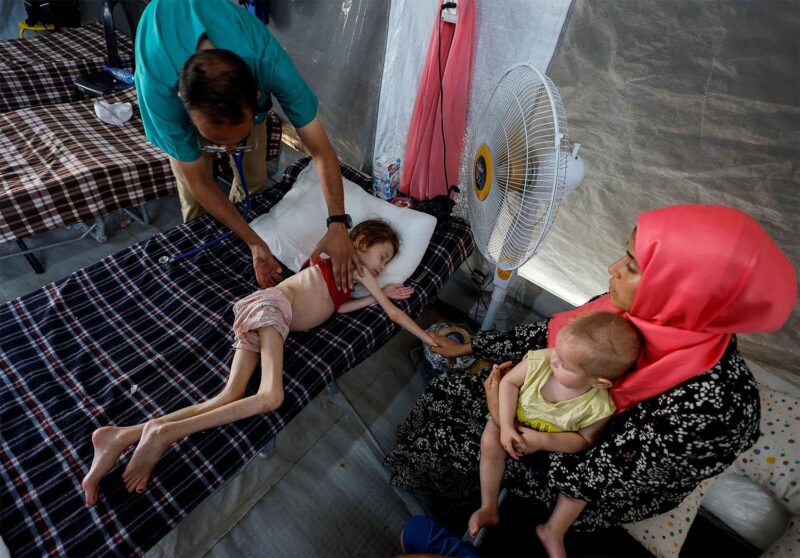
Gaza is being pushed into famine by Israel’s deliberate blockade of food and humanitarian aid, leaving thousands of Palestinian children on the edge of starvation.
International aid agencies and UN officials warn that Gaza’s hunger crisis has reached catastrophic levels, describing it as one of the worst humanitarian disasters of our time.
For months, Israel has restricted the entry of vital food supplies, including fortified milk and therapeutic nutrition needed to save starving children. Although Tel Aviv claims it has loosened the blockade, the limited trickle of aid is nowhere near enough to feed Gaza’s population of over two million, who have been under siege since October 2023.
According to Gaza’s Health Ministry, deaths from malnutrition are rising sharply. In just the first 20 days of August, 133 Palestinians died from hunger, including 25 children. These figures were verified by the World Health Organization, yet Israel continues to deny that famine exists in Gaza, dismissing reports of mass starvation as “medical complications.”
The United Nations, however, has accused Israel of weaponising food against civilians — a war crime under international law. Rights groups have also documented Israeli forces shooting Palestinians as they tried to collect aid.
Inside Gaza’s shattered hospitals, doctors describe heartbreaking scenes. Infants arrive emaciated, too weak to cry. Mothers, themselves starving, cannot produce milk to feed their babies. At Rantisi Hospital in Gaza City, a doctor displayed a skeletal infant whose life depends on a therapeutic formula that is almost impossible to obtain.
Some mothers have been forced to feed their children with herbs and wild plants. “There was no milk,” said Aisha Wahdan, a young mother. “I tried chamomile and thyme, anything I could find. My baby was dying.”
Three-month-old Kholoud al-Aqra weighs only two kilograms — barely a third of a healthy child’s weight. Her mother survives on a single bowl of soup some days and says she nearly faints while breastfeeding. Aid workers warn that without immediate therapeutic foods, thousands of babies like Kholoud will die in the coming weeks.
Agriculture and fishing, once Gaza’s main food sources, have been destroyed by Israeli bombardments, leaving Palestinians almost entirely dependent on imports. But Israel continues to strangle those imports, allowing only limited amounts of aid while blaming the UN and local authorities for distribution problems.
The reality is undeniable: hunger is being used as a weapon. Aid agencies report that of the 290,000 children under five who urgently need supplements, only 3% received them last month. UNICEF says it has almost no supplies left, while the World Food Programme has warned of a “preventable mass death” if aid is not allowed to flow freely.
Despite the suffering, Gaza’s people remain steadfast. “Hamas is keen more than anyone else for aid to reach our people,” said Ismail Al-Thawabta, head of Gaza’s media office, rejecting Israel’s propaganda that aid is being “stolen.”
The world has already witnessed the images: starving children, desperate parents, and long lines at destroyed bakeries. What is happening in Gaza is not a natural famine — it is a man-made catastrophe imposed by Israel’s blockade and war.
For Libya, and for the Arab world, the message is clear: silence in the face of starvation is complicity. The children of Gaza are not numbers in a report — they are the sons and daughters of Palestine, and they are being starved before the eyes of the world.
How to submit an Op-Ed: Libyan Express accepts opinion articles on a wide range of topics. Submissions may be sent to oped@libyanexpress.com. Please include ‘Op-Ed’ in the subject line.

- Mauritania bans food exports to stabilise domestic prices - March 09, 2026
- Pelosi cites Libya to criticise Trump’s Iran strikes - March 08, 2026
- Streaming platform pulls Libyan series over Haftar narrative claims - March 08, 2026