


Taxi app drivers in Morocco push for legal reforms with October strike
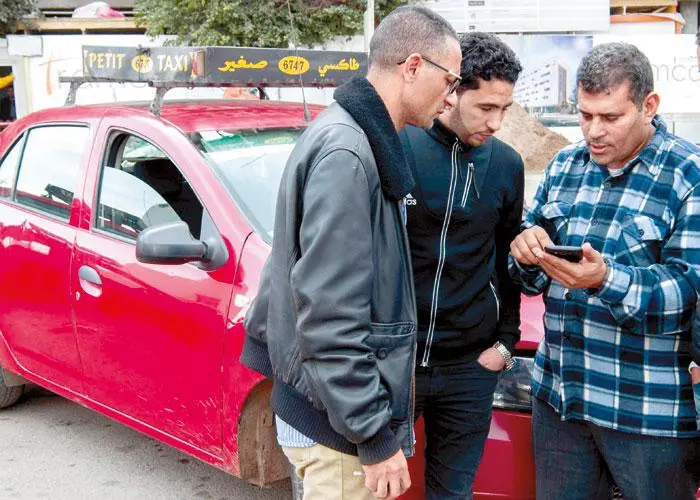
Drivers working for ride-hailing platforms in Morocco have announced plans to stage a nationwide strike in October, protesting against what they call “unfair competition” from low fares imposed by these applications.
In a statement, the National Coordination of App-based Drivers in Morocco accused the apps of raising the per-kilometre rates by at least four dirhams, while at the same time failing to respond to calls for a legal framework to regulate the sector.
Mohsen Alaoui, a private driver and member of the interim executive committee of the Association of Self-Employed Tourist Vehicle Drivers, told Hespress that the strike will be partial and intermittent: two hours in the morning and two in the evening daily, with the possibility of full escalation over time.
According to him, many drivers have operated for more than nine years without formal licencing of their vehicles, under the status of self-employed professionals. He accused the state of favouring traditional taxi licence holders (maudoniyat) and allowing a “rent-seeking” environment, while app-based firms exploit legal ambiguity to dominate through low fares.
Alaoui also claimed that drivers already pay tax: about 2 % in VAT, 1 % income tax via the self-employment regime, and social security contributions — yet receive only a small share of trip revenues after platform commission, which sometimes exceeds 25 %.
He argued that improving urban transport requires legalisation of new modes such as VTCs (Voiture de Transport avec Chauffeur) and promotion of greener vehicles, saying the strike is intended as a signal to the ministries of Transport and Interior of their importance in addressing transport deficits, especially in major cities.
The drivers’ grievances include what they call unfair competition from global app companies, which allegedly undercut prices aggressively to capture market share, making it difficult for local drivers to compete. Alaoui contended that some companies even rely on subsidised pricing strategies and exploit inactive accounts from public and private sector employees to offer ultra-low fares.
In response, some observers and consumer advocates note that ride-hailing apps fill a transport gap in cities with underdeveloped public transit systems. Abdelkrim Chafii, vice-president of Morocco’s Consumer Protection Federation, told Hespress that these apps are “an important mode of transport, especially given the shortage of public transit,” and urged the government to “accelerate formal regulation rather than acquiesce to disorder.”
How to submit an Op-Ed: Libyan Express accepts opinion articles on a wide range of topics. Submissions may be sent to oped@libyanexpress.com. Please include ‘Op-Ed’ in the subject line.

- Libya under-20s draw 1–1 with Zamalek - September 21, 2026
- Egyptian pupils face exclusion for filming teachers - September 21, 2026
- Indian Oil buys Libyan crude at $23 premium to Brent - September 21, 2026