


Can Algeria reclaim its influence in the Sahel?
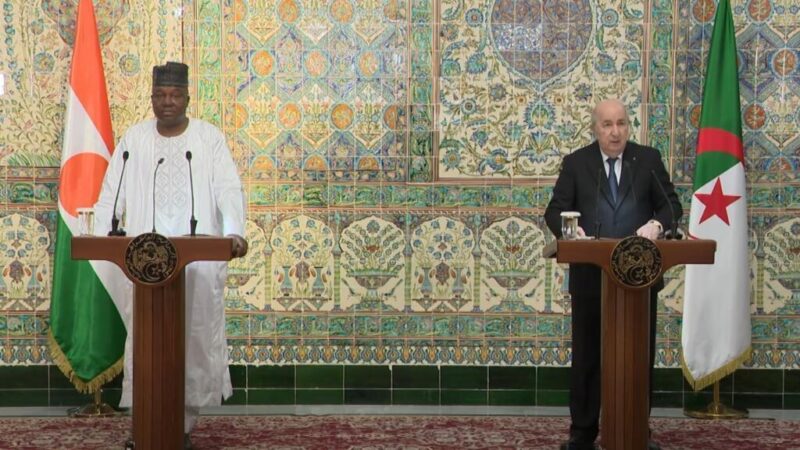
Algeria is once again positioning itself at the centre of regional dynamics in the Sahel, launching a series of political and diplomatic initiatives aimed at restoring what it sees as its traditional sphere of influence. For decades, the vast belt of territory stretching south of its borders has been a cornerstone of Algeria’s geopolitical calculations.
Yet a pressing question now looms: can Algiers truly regain its former weight in a region transformed by conflict, competition and shifting alliances?
Historical ties and strategic depth
Algeria’s relationship with the Sahel is rooted in history. Since gaining independence in 1962, Algiers has sought to play a leading role in African affairs, drawing on its anti-colonial struggle and its long-standing commitment to pan-African solidarity.
Over the years, this engagement extended well beyond rhetoric. Algeria emerged as a diplomatic and security actor in countries such as Mali, Mauritania and Niger, contributing to mediation efforts, border security coordination and attempts to contain recurring crises.
One of the most notable examples was Algeria’s mediation in Mali’s internal conflict, culminating in the 2015 Algiers Peace Agreement, where it positioned itself as a neutral broker committed to dialogue rather than direct intervention.
For Algiers, the Sahel has never been a distant theatre. It is strategic depth — a buffer zone where instability can quickly spill northwards.
A crowded and contested arena
Today, however, the diplomatic and security landscape of the Sahel has shifted dramatically.
Chronic insecurity continues to plague large swathes of the region. At the same time, the Sahel has become an arena for multipolar competition. Traditional actors such as France remain present, albeit with diminished influence in certain contexts. Meanwhile, Turkey has expanded its footprint through development projects and economic partnerships, and Morocco has pursued diplomatic and commercial engagement.
Russia, too, has deepened its involvement, particularly in sensitive security dossiers, through military advisers and affiliated private entities operating in parts of the Sahel.
Against this backdrop, Algeria faces a dual challenge: preserving its historical relationships while adapting to new rules of engagement shaped by external powers with significant financial, military and political leverage.
Security first: the imperative of stability
Security remains the core of Algeria’s Sahel doctrine.
The country’s vast southern frontier stretches thousands of kilometres across porous desert terrain adjoining conflict-affected states. The proliferation of armed groups and trafficking networks in the Sahel places direct pressure on Algerian national security.
For this reason, stability in neighbouring countries is not a matter of diplomatic prestige alone, but of domestic security. Algeria has consistently framed its approach around principles of non-interference and respect for sovereignty, presenting itself as an alternative to overt foreign intervention.
It has repeatedly offered mediation between Sahel governments and armed factions, seeking negotiated settlements over military escalation. In doing so, Algiers has aimed to reinforce its image as a credible, balanced interlocutor.
Limits of influence
Yet the question persists: does Algeria possess the necessary tools to make these efforts succeed in today’s environment?
Economically, Algeria faces constraints that limit its ability to compete with wealthier or more agile actors investing in infrastructure, development aid and security assistance. Internally, political and economic pressures may further restrict its capacity for sustained, long-term engagement in complex regional crises.
Diplomatically, the fragmentation of authority within several Sahel states, coupled with the rise of military-led governments and shifting alliances, complicates mediation efforts. Influence can no longer rely solely on historical ties or ideological affinity.
A test of strategy
Algeria’s renewed activism in the Sahel reflects both necessity and ambition. The region remains integral to its national security architecture and its broader African policy.
However, reclaiming influence in a transformed Sahel will require more than diplomatic outreach. It demands economic resilience, strategic flexibility and the ability to navigate an increasingly competitive geopolitical environment.
Whether Algiers can translate its historical capital into renewed leverage will shape not only its standing in the Sahel, but also its broader role across the African continent.
How to submit an Op-Ed: Libyan Express accepts opinion articles on a wide range of topics. Submissions may be sent to oped@libyanexpress.com. Please include ‘Op-Ed’ in the subject line.

- Libya and Chad seize heavy weapons in border sweep - February 26, 2026
- Can Algeria reclaim its influence in the Sahel? - February 26, 2026
- Professor cautions that UN reset could deepen Libya’s divisions - February 24, 2026