


Iran, Israel and the contest for strategic order in the Middle East
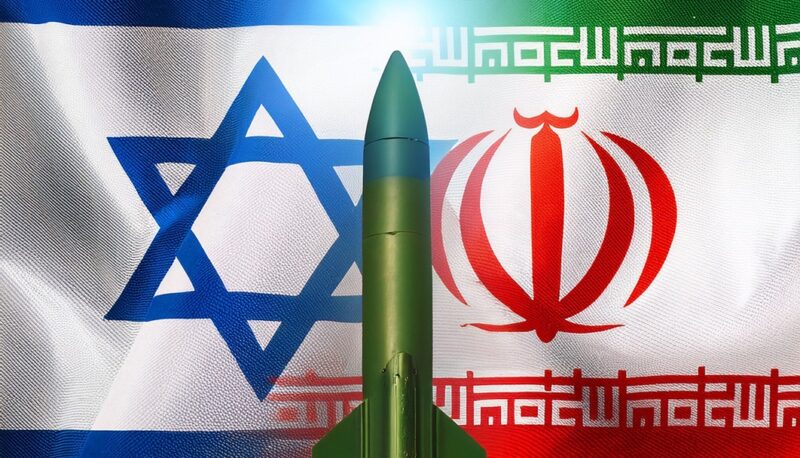
A recent opinion article by Libyan writer Nasser Al-Senussi, published in Al Wasat, offers a wide-ranging and provocative assessment of Iran’s evolving role in the Middle East. The piece frames Tehran’s actions not as isolated policy decisions, but as part of a broader effort to challenge a regional order that has been shaped for generations by Western strategic priorities.
Al-Senussi situates the current moment within a long historical arc. He argues that the geopolitical structure of the Middle East has, for nearly two centuries, been defined by external powers whose military, economic and technological superiority enabled them to impose enduring constraints on the region. These constraints, in his view, have limited the ability of states to develop the kind of autonomous capacity that would allow them to act independently on the global stage.
At the centre of his analysis is the argument that Iran has reached a point where it is no longer willing to operate within these limitations. Regardless of its political system, the country is presented as a historically rooted civilisation with ambitions that extend beyond the boundaries traditionally imposed on regional actors. This sense of identity, the article suggests, underpins Tehran’s determination to build its own sources of strength in an increasingly uncertain international environment.
A key theme in the article is what Al-Senussi describes as an implicit Western doctrine designed to prevent the emergence of militarily self-sufficient states in the Middle East. According to this interpretation, the acquisition of advanced military capabilities, particularly in areas such as missile systems or nuclear technology, is viewed by Western powers as a direct challenge to the established balance. Efforts by regional states to pursue such capabilities have historically been met with resistance, whether through political pressure, economic sanctions or the threat of force.
Within this framework, Iran’s military and technological ambitions are portrayed as both defensive and strategic. The article argues that Tehran seeks not only to protect its sovereignty and economic interests, but also to redefine its position within a regional order that it perceives as restrictive and unequal. This ambition, however, places it on a collision course with entrenched power structures.
The second dimension of the analysis focuses on Iran’s relationship with Israel. Al-Senussi describes Israel as a central component of the broader strategic architecture in the Middle East, arguing that any confrontation with it carries wider implications. In this reading, tensions between Tehran and Israel are not merely bilateral disputes, but expressions of a deeper structural conflict that reflects competing visions for the region’s future.
The article further identifies the United States as the principal actor sustaining this order in its modern form. As the successor to earlier European influence in the region, Washington is portrayed as playing a decisive role in shaping responses to Iran’s policies. Al-Senussi suggests that the United States has pursued a dual approach that combines diplomatic engagement with sustained pressure, including sanctions and the possibility of military escalation.
At the same time, the article notes a degree of caution in American strategy. While the United States possesses overwhelming military capabilities, the risks associated with a broader regional conflict remain significant. The potential consequences of escalation, both for regional stability and for global interests, appear to have encouraged a careful balancing act between deterrence and restraint.
Al-Senussi also reflects on what he describes as consistent Western alignment with Israel, particularly during moments of heightened tension. He argues that this alignment has reinforced existing divisions and contributed to an environment in which conflicts are more difficult to contain. The events of recent years, including periods of intensified violence, are cited as examples of how quickly regional crises can draw in broader international involvement.
Beyond its immediate geopolitical analysis, the article raises a wider question about the durability of the current regional order. It asks whether a system shaped in a very different historical context can continue to function in an era marked by shifting power dynamics and the re-emergence of regional actors seeking greater autonomy.
In this sense, Iran is presented not only as a challenger but also as an indicator of broader change. Its policies, whether viewed as assertive or destabilising, reflect deeper transformations within the international system. The balance between established powers and emerging actors is no longer static, and the Middle East remains one of the key arenas in which this evolution is unfolding.
The article concludes that the outcome of Iran’s confrontation with existing power structures will have far-reaching implications. Whether through negotiation, containment or escalation, the direction taken will help shape the region’s future for years to come.
For observers in Libya and across the wider region, the analysis serves as a reminder that local dynamics are often closely intertwined with global strategic competition. As the Middle East continues to navigate a period of uncertainty, the interplay between ambition, power and external influence is likely to remain a defining feature of its political landscape.
How to submit an Op-Ed: Libyan Express accepts opinion articles on a wide range of topics. Submissions may be sent to oped@libyanexpress.com. Please include ‘Op-Ed’ in the subject line.

- Iran, Israel and the contest for strategic order in the Middle East - April 05, 2026
- Libya and Turkey sign sports cooperation - April 05, 2026
- Tehran adds Israeli power plants to response plans - April 05, 2026