


Central bank’s Sharia board reasserts authority over Libyan banking
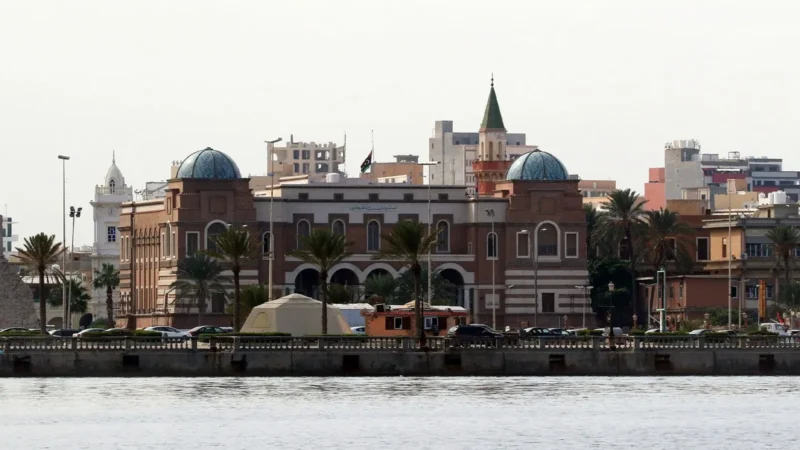
The Central Bank of Libya’s Sharia supervisory board has ruled that reserving $2,000 for personal use is permissible under Islamic law, setting out a different assessment of the booking system from that underpinning Dar al-Ifta’s earlier rejection.
In a statement issued on Sunday, the board said customers remained free to complete, postpone or cancel their purchases without any legal or moral obligation to proceed. No exchange rate was fixed and ownership of the dollars did not transfer at reservation, making the booking an administrative step before a purchase.
The board said that even if a reservation were classified as a promise to exchange currencies, its non-binding nature made it permissible. It cited standards issued by the Accounting and Auditing Organization for Islamic Financial Institutions (AAOIFI).
Dar al-Ifta’s Sharia research council had described the arrangement differently. In a memorandum published on 15 September, it objected to fixing an exchange rate when a reservation was made for a transaction to be completed later. Such a commitment, it said, breached the requirement for both currencies to change hands when the exchange contract was concluded.
The council proposed allowing customers to reserve only the right to request foreign currency, without committing to a price. The rate would then be agreed when the transaction took place, with both sides receiving their currency at that point.
The central bank’s board also reaffirmed its approval of certificates of deposit structured around unrestricted mudaraba, an Islamic investment arrangement involving the sharing of profits. It said the product had undergone institutional and religious review drawing on international Islamic finance standards and resolutions of the International Islamic Fiqh Academy.
Under the conditions outlined by the board, returns must represent an agreed share of realised investment profits. Capital cannot be guaranteed against ordinary investment losses, although liability may arise from misconduct or negligence. Advertised yields are indicative and do not constitute a guaranteed return.
Dar al-Ifta’s council, meanwhile, said it would not permit subscriptions to the product before reviewing its full contractual documentation and investment arrangements.
Its memorandum also challenged financial guarantees imposed on exchange companies solely because they acted as agents, saying liability required misconduct or negligence. It called for commissions collected by those companies to be stopped and refunded where they represented payment for guarantees or agency work that was not actually performed.
The central bank’s board maintained that its Sharia rulings were binding within the bank and the banking institutions under its supervision, citing the legislation governing the sector.
How to submit an Op-Ed: Libyan Express accepts opinion articles on a wide range of topics. Submissions may be sent to oped@libyanexpress.com. Please include ‘Op-Ed’ in the subject line.
- 4+4 committee renews election pledge as approval remains contested - September 21, 2026
- Syria’s military rebuilding raises concern in Israel - September 21, 2026
- Central bank’s Sharia board reasserts authority over Libyan banking - September 21, 2026